Case Study
Trucking Website Design — Sparks Transport Case Study
A bespoke trucking website for one of the largest privately owned transport companies in the United Kingdom — operating continuously since 1933.
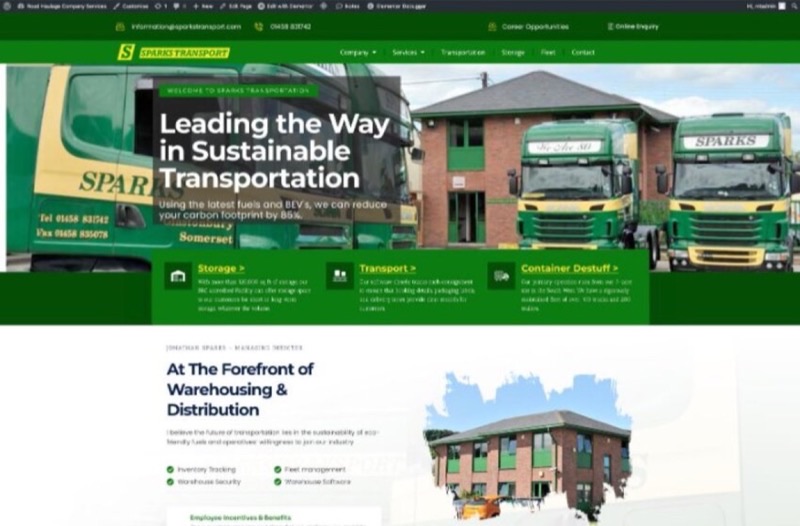
One of the best trucking web design case studies
Operational since 1933, Sparks Transport remains a family owned and run organisation. With continuous annual growth, Sparks is currently one of the largest privately owned transport companies in the United Kingdom, running warehousing, distribution and container destuffing alongside their haulage fleet.
Mediatopia approached Sparks Transport because we believed their old website was not doing them justice. As we travel daily all over the UK we saw the Sparks lorries often — a smart, well-run fleet attached to a website that did not reflect any of it. After an initial approach we had a meeting, and the rest is history.
That gap is common in haulage. The business is built on relationships, repeat contracts and word of mouth, so the website is rarely the priority. But the buyers have changed. A logistics manager sourcing a new carrier will look you up before they call, and what they find decides whether they call at all.
What a haulage website has to do
A transport website has three audiences and they want different things. Prospective customers want to know what you carry, where you cover and whether you are accredited. Drivers want to know whether you are hiring and what the work looks like. Existing customers want a phone number or a tracking reference without hunting for it.
Most haulage sites fail the first group by burying services in one long page. If warehousing, storage, distribution and container handling all live on a single "Services" page, that page can only rank for one thing. Split into individual pages, each one can rank for the term customers actually search — and each becomes a landing page for its own enquiries.
The second group matters more than most operators expect. Driver recruitment pages are routinely the highest-traffic section of a transport website, and with the right structured data a vacancy can appear directly in Google Jobs.
And all of it has to work on a phone. We build mobile-first as standard and test on real devices, because a driver checking vacancies in a lay-by and a logistics manager checking your accreditations between meetings are both on mobile.
What We Built
Project development work carried out
Responsive Development
Built mobile-first and tested on real devices. A large share of haulage traffic arrives from a phone at the roadside or in a yard, often on poor signal, so pages had to load fast and forms had to work one-handed.
WebGuru CMS
Our own content management system, integrated into every component of the site so the team can add depots, update services and post vacancies without needing a developer for routine changes.
Service & Depot Structure
Each service given its own page rather than one long list, so the site can rank for the individual terms customers actually search — warehousing, container destuffing, storage, distribution.
Why bespoke rather than a template
Sparks could have had a template site for a few hundred pounds. It would have looked acceptable and it would have been a liability inside two years — plugin updates breaking the layout, no way to add a depot without a developer, and a page structure fixed by whoever built the theme rather than by what the business actually sells.
We build bespoke websites so the structure follows the business. When Sparks add a service, it gets its own page with its own title and its own route into search. When they open a depot, it gets a page. Nothing is constrained by what a theme author anticipated.
The site runs on WebGuru, our own content management system, and is hosted on UK servers with support direct from the person who built it. That combination — bespoke build, own CMS, own hosting — is why clients like Sparks are still with us years later.
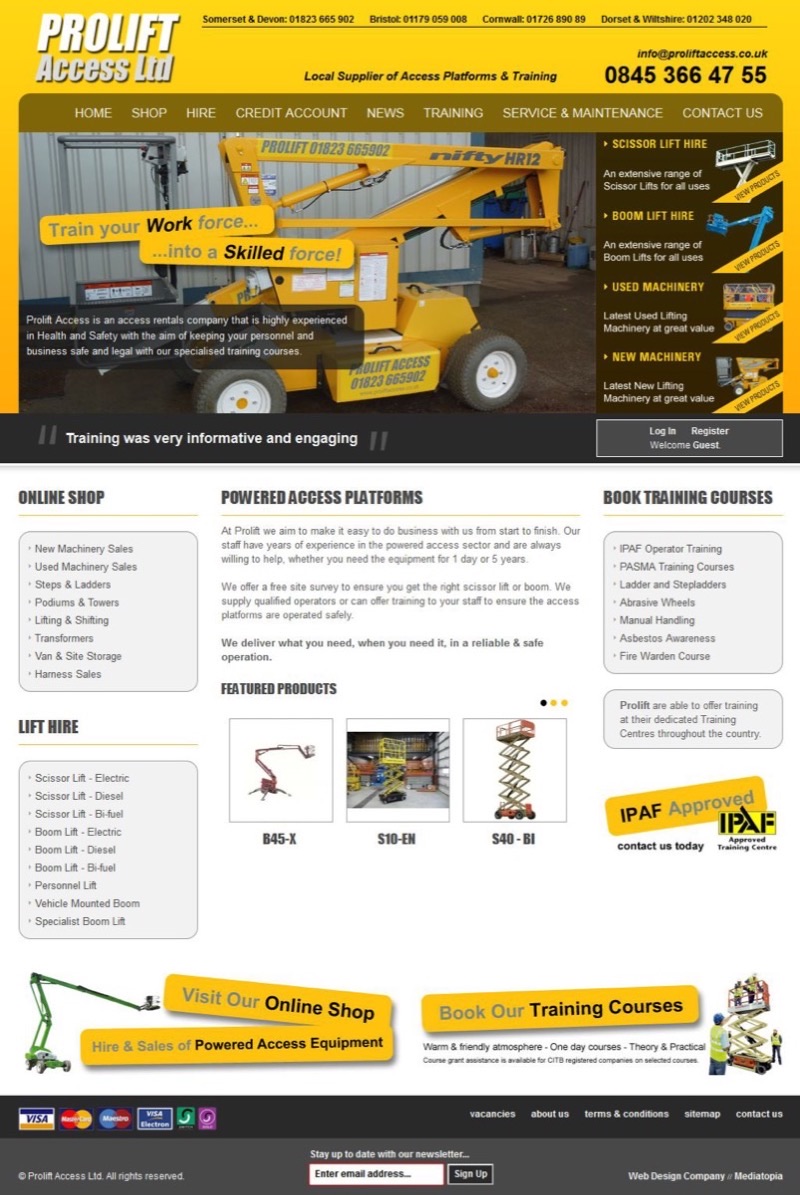
If your transport or logistics business is in the same position — a good operation behind a website that does not show it — that is exactly the work we do. Look at the S.Morris construction case study or the Prolift Access plant hire case study for comparable projects.
Common Questions
Trucking website design FAQs
More case studies
View all work →





Need a website for your haulage business?
Tell me what you need and I will give you a fixed price. You deal with the person who builds it — not an account manager, not an offshore team.