Case Study
Tail Lift Website Design — Bristol Hydralifts Case Study
A Bristol tail lift specialist who has been a client since 2006 — now on a thirteen-page site of their own, with a booking form, a photo quote and a chat on every page.

Twenty years with the same web company
Bristol Hydralifts install, service and repair vehicle tail lifts across Bristol and the surrounding area. They became a Mediatopia client in 2006 and have been with us ever since — twenty years, and several complete redesigns in that time. The newest went live on their own domain in September 2026.
That is the part of this case study worth paying attention to. A website is not a project that finishes. Technology moves, search changes, and what looked current in 2006 soon looked dated, and before long was unusable on a phone. Each rebuild kept the site working rather than letting it quietly rot until it had to be replaced from scratch.
The newest rebuild replaces a single landing page — one that ranked at the top of Google for tail lifts in Bristol — with a full site built around everything the business actually does.
From one page to seven services
Bristol Hydralifts do more than fit tail lifts. They supply and install tail lifts, passenger lifts, roller shutter doors and curtains, and they service, repair, examine and weight-test them — on vans, rigids and trailers.
A single page could list those services, but it could not rank for each of them. The new site gives every service its own page — tail lifts, passenger lifts, roller shutters, servicing, mobile repairs, LOLER inspections and weight testing — each with its own title, heading and questions. Someone searching for a LOLER inspection lands on the page about LOLER inspections, not a general one.
Alongside them sit a page for the ten makes they represent, an about page, a contact page, and the privacy and terms pages the old site never had. Thirteen pages in all, each one able to rank for what it is about.
Built for a phone in a yard
The audience is almost entirely mobile. A transport manager with a lift out of action is on a phone in a yard, and they are not going to hunt through a menu. We build mobile-first so the number is one tap away wherever they land.
So the workshop's number sits at the top of every page, and so does a Book a service button. It opens a short form — the job, the vehicle, the registration, the lift make and the postcode — and sends it to the workshop as an email, so nobody has to go back to the home page to ask for a visit.
Most customers cannot tell a cantilever lift from a slider from a description, so the home page shows both working, in animated diagrams. The legal side is explained the same way: a tail lift is lifting equipment under LOLER 1998, and the site sets out the six- and twelve-month examination intervals in plain terms.
The menu is the full-screen one we now fit on every site: every page a tap away, and it opens and closes with a keyboard as well as a thumb.
A photo of the lift, straight to the workshop
Describing a tail lift fault over the phone is hard, and most drivers do not know the make of the lift they are standing next to. So the corner of every page carries a second option: send a photo.
A driver photographs the lift, adds a line about what it is doing and the site postcode, and it arrives at the workshop with the photograph attached. No app, no account, and nothing to wait for — it can be sent from the yard at six in the morning.
An assistant that answers at ten at night
Beside it sits a chat that answers from the site’s own pages: the difference between a cantilever and a slider, what LOLER means and how often it applies, which vehicles they cover, where they are. When somebody wants a person rather than an answer, it hands them to the enquiry form.
Most of those conversations happen outside working hours, which is when a broken lift tends to be discovered.
Ready for the way people search now
Every page states its own facts inside the markup it is served with: who the business is, where it is, what it does, the hours, each service. That is what Google reads, and it is what the AI assistants people now ask read too, because they take the page as it arrives rather than waiting for scripts to run.
It is quick with it. The site answers in about half a second from a London server, which matters when the person searching is standing next to the vehicle.
Ranking for a specific trade term
Tail lifts in Bristol is a narrow, high-intent search. Nobody types it idly — they type it because something has broken and they need it fixed. Getting to the top of that result is worth more than a broad ranking for vehicle engineering ever would be.
The way you get there is by matching the page to the search precisely. The service in the title, the service in the heading, the location stated plainly, and a Google Business Profile that agrees with the website. Most trade websites fail on the first point alone by trying to cover eight services on one page and ranking properly for none of them.
The new site applies that to every service rather than one. Each page matches its own search and carries Service schema, so Google knows exactly what it describes, and the home page gains the main heading the old one-pager was missing.
Sustaining it is the other half. Rankings held for years are the product of a site that gets maintained, search optimisation that stays current, and hosting that does not fall over. That is easier when the same person does all three.
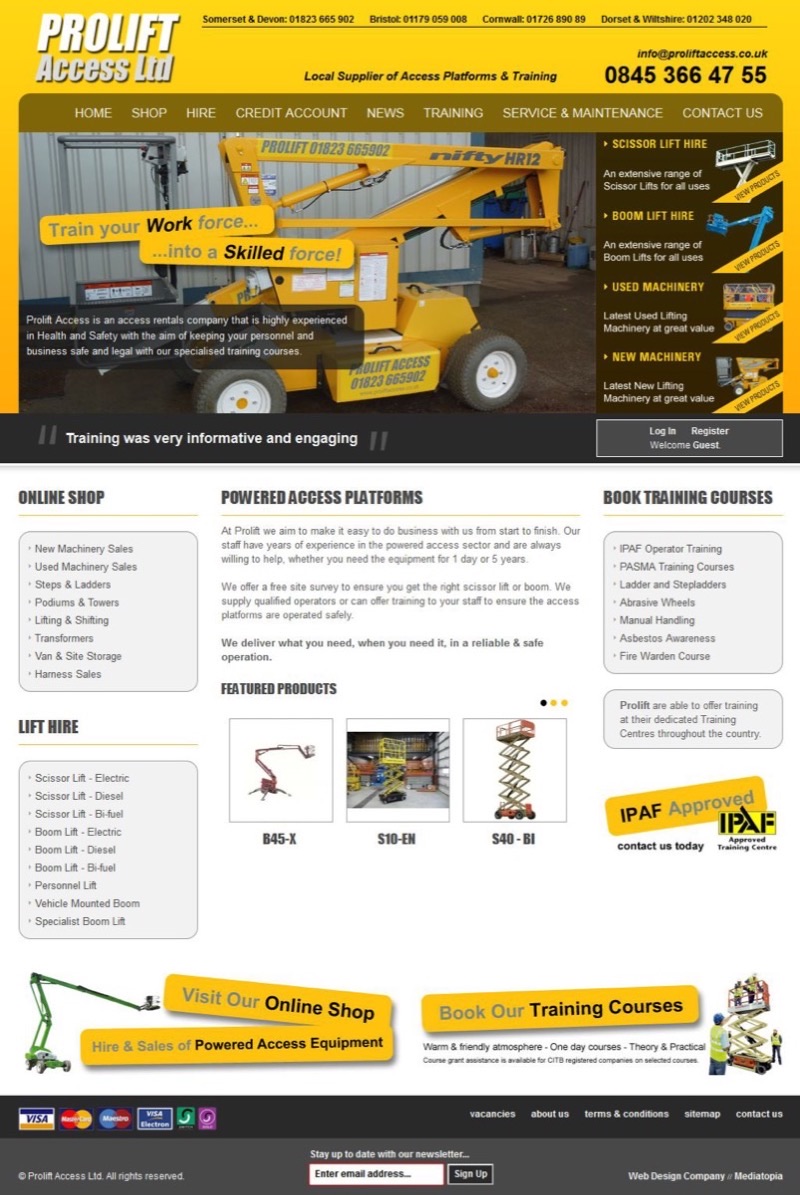
If you run a vehicle engineering, plant or workshop business in Bristol and the website is not bringing calls, that is exactly the work. The Prolift Access case study and the S.Morris case study are comparable projects.
Nothing lost in the move
Going live is the part that goes wrong on other people’s rebuilds. Their domain moved to the new site with the certificate issued before the switch, their email untouched, and the leftover addresses from the old WordPress site redirected rather than left to return a 404.
What We Built
Project development work carried out
Thirteen Pages, From One
A page for each of the seven services — tail lifts, passenger lifts, roller shutters, servicing, mobile repairs, LOLER inspections and weight testing — plus the makes they represent, about, contact, privacy and terms.
Book A Service, On Every Page
The job, the vehicle, the registration, the lift make and the postcode in one short form, sent straight to the workshop.
A Photo Quote And A Chat
A photograph of the lift reaches the workshop with the fault and the postcode, and an assistant answers from their own pages when the office is shut.
Live On Their Own Domain
Rebuilt and moved to hydralifts.co.uk in September 2026, old addresses redirected and the email untouched, twenty years after they became a client.
Common Questions
Tail Lift Website Design FAQs
More case studies
View all work →





Need a website for your Bristol business?
Tell me what you need and I will give you a fixed price. You deal with the person who builds it — not an account manager, not an offshore team.