Project info
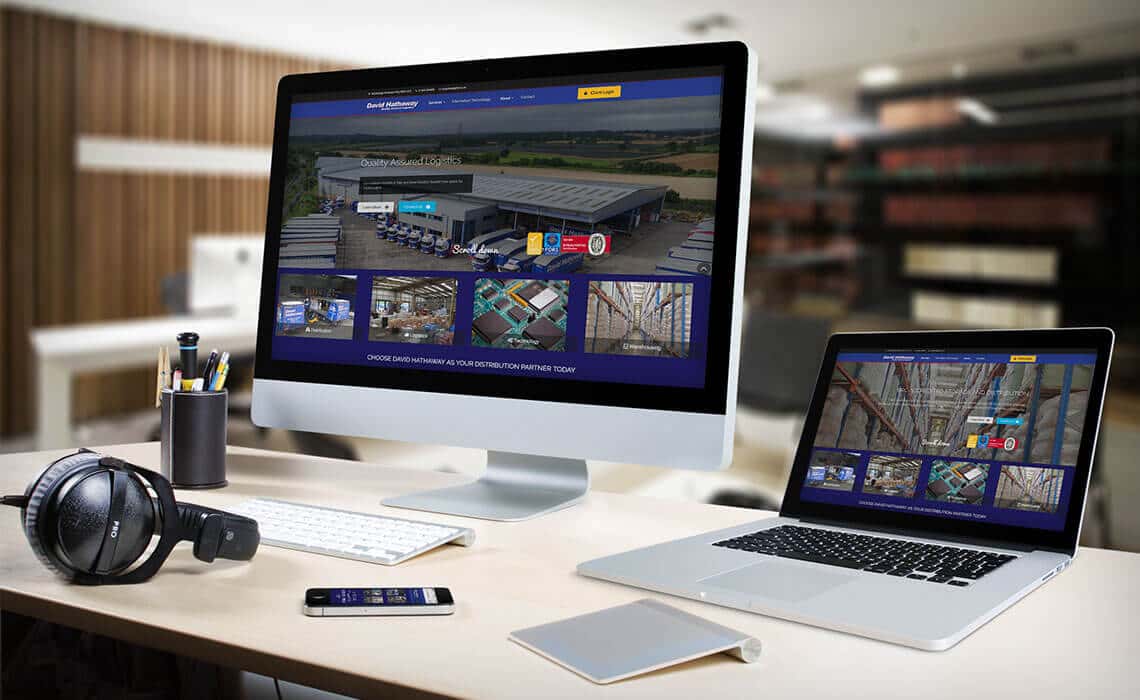
David Hathaway got in contact with Mediatopia as they were looking for a professional web company to build them a new bespoke transportation website. After an initial meeting we created a proposal, and following a second meeting were commissioned to build the site.
We decided on a full-screen landing page style so we could maximise the visual impact of the business. We created a responsive design that works smoothly across all tablet and mobile devices. The end result is a modern, appealing website that stands head and shoulders above other traditional transportation sites.
Why most transport websites look the same
Open ten road haulage websites and nine will be near-identical: a stock photograph of a motorway, a paragraph about reliability, and a list of services. There is nothing wrong with any of it, and that is precisely the problem — nothing distinguishes one operator from the next.
A full-screen design was the answer here because haulage is a visual business. Fleets are smart, liveries are distinctive, and depots are impressive. Using that at full scale immediately separates an operator from competitors relying on stock imagery.
The practical requirements underneath do not change. A logistics manager assessing you wants to know what you carry, where you cover and whether you are accredited, and they want it fast. We build responsive sites so that works on a phone as well as it does on a desk.
What transport operators should get from a website
Three things. New enquiries from shippers looking for capacity. Driver applications, which for most operators is the highest-traffic part of the site. And fewer routine phone calls, because the answers are on the page.
None of those happen by accident. Each service needs its own page to rank for its own term, the vacancies section needs to be findable, and the whole thing needs to load fast on poor signal. That is the difference between a brochure and a site that works.
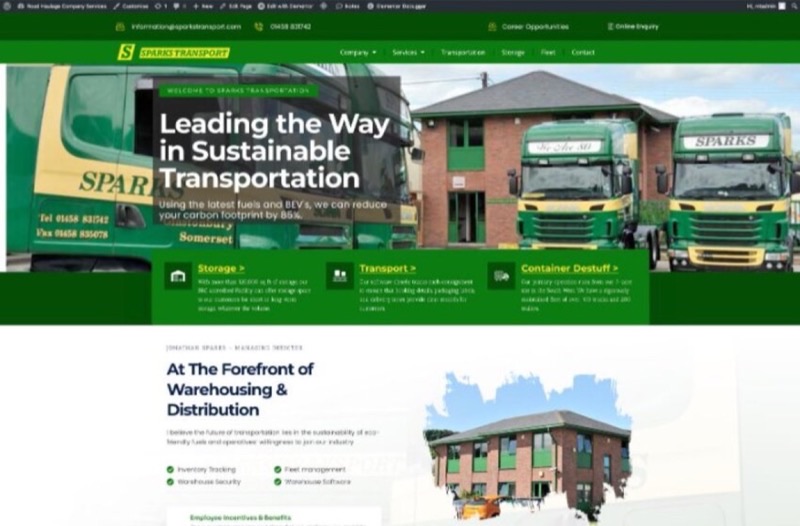
If you run a haulage, distribution or logistics business, that is the job. The Sparks Transport case study is the closest comparable project, and the S.Morris case study covers the same principles in the construction supply chain.
Project development work carried out
Full-Screen Landing Design
A full-screen style built to maximise the visual impact of the fleet and the operation, rather than another stock motorway photograph.
Responsive Development
Works smoothly across tablet and mobile, because logistics managers and drivers are rarely at a desk when they look you up.
WebGuru CMS
Our content management system, so services, depots and vacancies can be updated in-house without a developer.
Transportation Website Design FAQs
More case studies
View all work →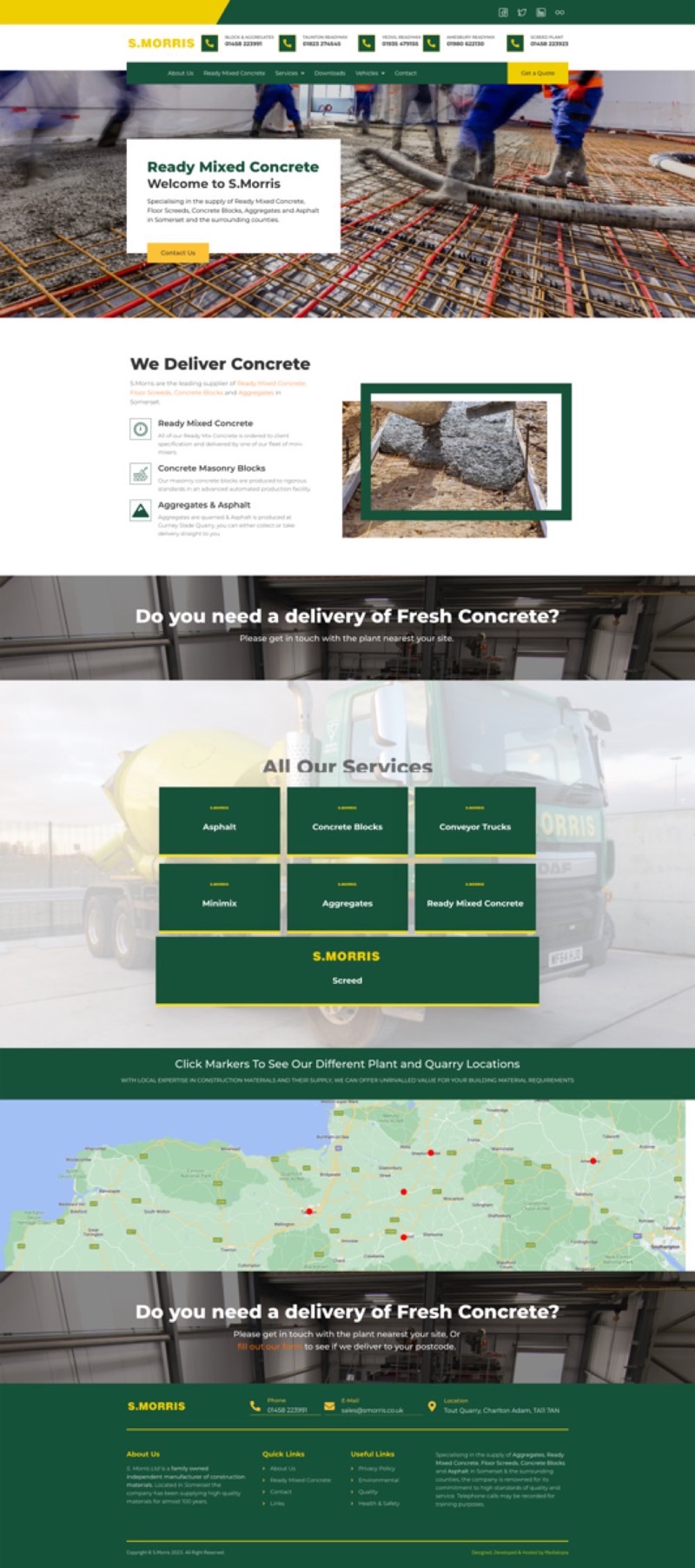
Need a website for your transport business?
Tell me what you need and I will give you a fixed price. You deal with the person who builds it — not an account manager, not an offshore team.